



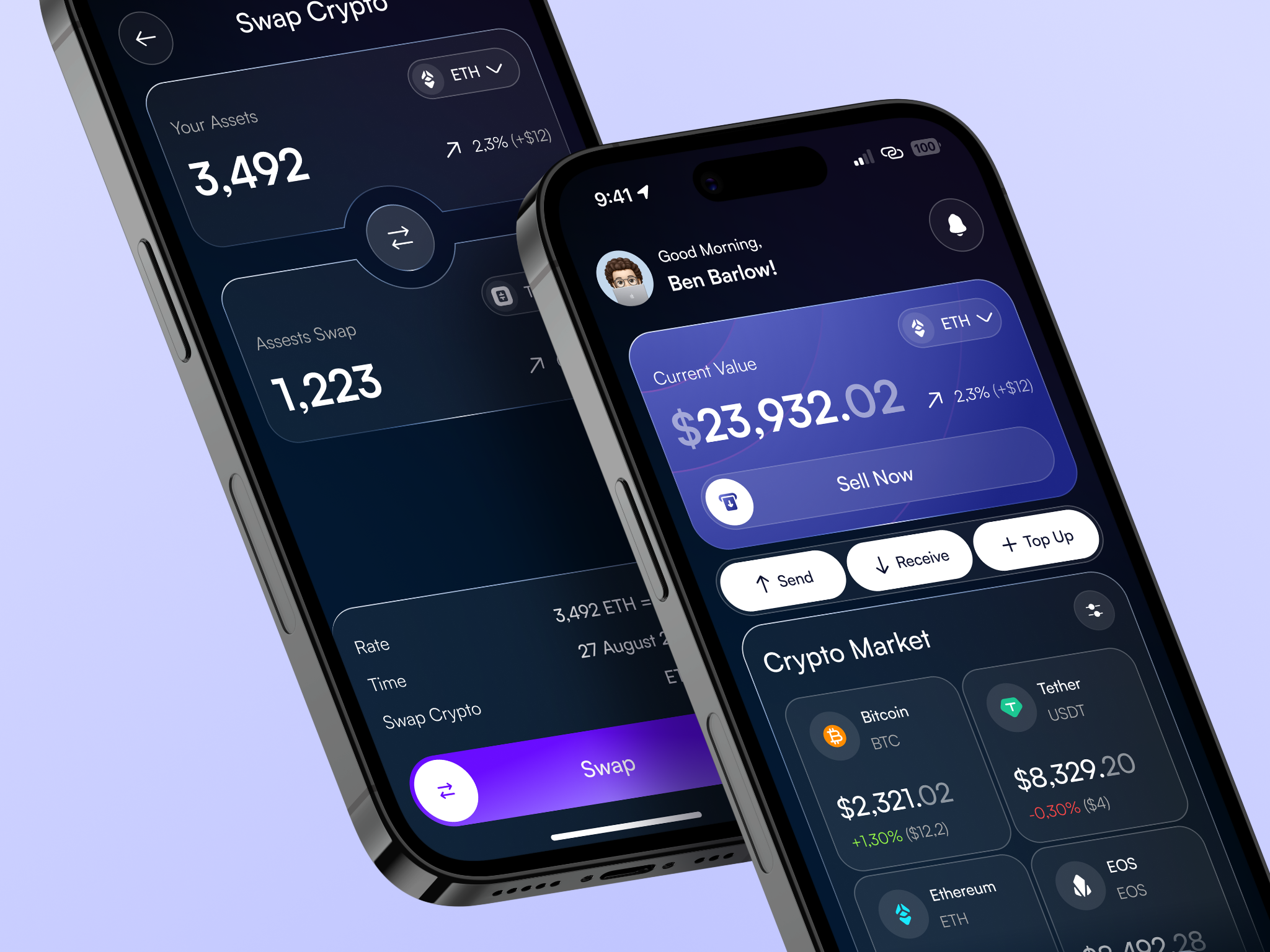
A European fintech company spent eighteen months building what they described as the “best personal finance app in the world.” The interface was beautiful. The technology was solid. The user testing scores in London were exceptional. They launched in Saudi Arabia expecting rapid adoption. Within three months, their daily active user rate had dropped to four percent. The app was not broken. It was culturally illiterate.
The problems were specific and revealing. The onboarding flow asked users to set individual savings goals—a concept that clashed with the communal financial decision-making common in Gulf families. The budgeting categories did not include charitable giving, despite the fact that Zakat is a fundamental financial obligation. The interface used green prominently for “positive” financial indicators, which worked fine culturally but the specific shade triggered associations with a competing Saudi banking brand. And the app assumed a single-user model in a market where family financial accounts are the norm.
None of these issues would have appeared in a standard usability test conducted in a Western context. They required a different kind of understanding—one that lives at the intersection of design expertise and cultural fluency.
What Western Frameworks Miss
The UX design discipline was largely formalized in Silicon Valley and Scandinavian design schools. Its foundational texts, heuristics, and best practices assume Western cultural norms: individual agency, linear task completion, direct communication, and low-context information processing. These assumptions are so embedded in standard design practice that most designers do not even recognize them as assumptions.
Gulf markets operate on fundamentally different cultural logic. Decision-making is often collective rather than individual. Trust is built through relationships and reputation rather than reviews and ratings. Communication tends to be high-context—meaning that what is not said matters as much as what is said. Time perception is more fluid, with less emphasis on rigid scheduling. And the relationship between public and private identity creates specific expectations about how personal information is displayed and shared.
These are not minor considerations to be addressed with a translation layer and some RTL layout adjustments. They affect fundamental product decisions: onboarding flows, information architecture, social features, notification strategies, payment processes, and customer support models.
RTL Is the Beginning, Not the End
The most common mistake we see is treating Arabic localization as primarily a layout problem. Yes, right-to-left text support is essential. Yes, mirrored navigation is required. But companies that stop there—and most do—miss the deeper design implications of serving Arabic-speaking users.
Arabic script connects letters within words, creating a visual flow that is fundamentally different from Latin text. This affects readability calculations, optimal line lengths, and the amount of content that fits in a given space. Standard Western typographic rules about line height, letter spacing, and paragraph width do not directly translate. We have found that Arabic text typically requires fifteen to twenty percent more vertical space than equivalent English content for comfortable reading—a detail that has cascading effects on layout, scrolling behavior, and content hierarchy.
Beyond typography, Arabic-speaking users have distinct scanning patterns. Eye-tracking studies we conducted in Riyadh showed that Gulf users tend to scan interfaces in an F-pattern modified for RTL—but with significantly more attention paid to visual imagery and brand signals than typically observed in Western user studies. This means that the visual design carries proportionally more weight in user decision-making, which has implications for everything from landing page design to product photography standards.
Trust Signals Differ Dramatically
In Western markets, trust is typically established through social proof (ratings, reviews, user counts), institutional markers (security badges, compliance certifications), and transparency (clear pricing, readable terms of service). These signals work in Gulf markets too, but they are supplemented—and often outweighed—by a different set of trust indicators.
Government endorsement or regulation carries enormous weight. A product that displays a connection to a government initiative or regulatory approval sees significantly higher trust scores than one relying solely on user reviews. Family and personal network recommendations outweigh stranger reviews by a wide margin. And the visual quality and perceived “premium-ness” of a digital product directly correlates with trust—more so than in most Western markets, where a deliberately minimal or rough aesthetic can signal authenticity.
This last point is critical for agencies designing for the Gulf. In markets like Sweden or the United States, a startup can launch with a deliberately bare-bones interface and build credibility through functionality alone. In Saudi Arabia or the UAE, the same approach often signals that the company is unserious or underfunded. The visual standard for trust is higher, which means design investment is not optional—it is a prerequisite for market entry.
The Ramadan Factor and Seasonal Design
Any company serious about the Gulf market must design for the radical behavioral shift that occurs during Ramadan. Usage patterns for virtually every digital category—e-commerce, entertainment, social media, food delivery, financial services—change dramatically during the holy month. Peak usage shifts to late evening and pre-dawn hours. Content consumption increases significantly. Purchasing behavior changes both in frequency and category. And there is a strong cultural expectation that brands acknowledge and respect the period through adapted experiences.
We design what we call “Ramadan modes” for our Gulf-market products: interface adaptations that shift color palettes toward warmer, more contemplative tones; content calendars that align with Iftar and Suhoor timing; notification scheduling that respects fasting hours; and featured content that acknowledges the spiritual dimension of the month without being presumptuous.
This is not a nice-to-have. Apps that ignore Ramadan behavioral shifts see measurable drops in engagement. Apps that acknowledge them—thoughtfully, authentically—see the opposite. One e-commerce client saw a thirty-seven percent increase in Ramadan engagement after implementing our seasonal design system, compared to the previous year when they ran the same interface year-round.
Building for What Is Coming
The Gulf region is in the middle of the most ambitious economic transformation in modern history. Saudi Vision 2030 alone is reshaping entire industries, creating demand for digital products that did not exist five years ago. The UAE continues to push boundaries in fintech, smart government, and digital services. Qatar, Bahrain, and Kuwait are investing heavily in digital infrastructure and citizen services.
The companies that will capture value in this transformation are not the ones that parachute in with products designed for London and translated for Riyadh. They are the ones that build from the ground up with Gulf cultural logic embedded in every design decision—from the first user story to the final interaction detail.
This requires a design partner that does not treat cultural adaptation as a localization exercise. It requires teams that live and breathe both Western design methodology and Gulf cultural context. It requires the patience to do the research, the humility to challenge assumptions, and the skill to create products that feel native to a market that is simultaneously deeply traditional and radically forward-looking.